


Description
Overview
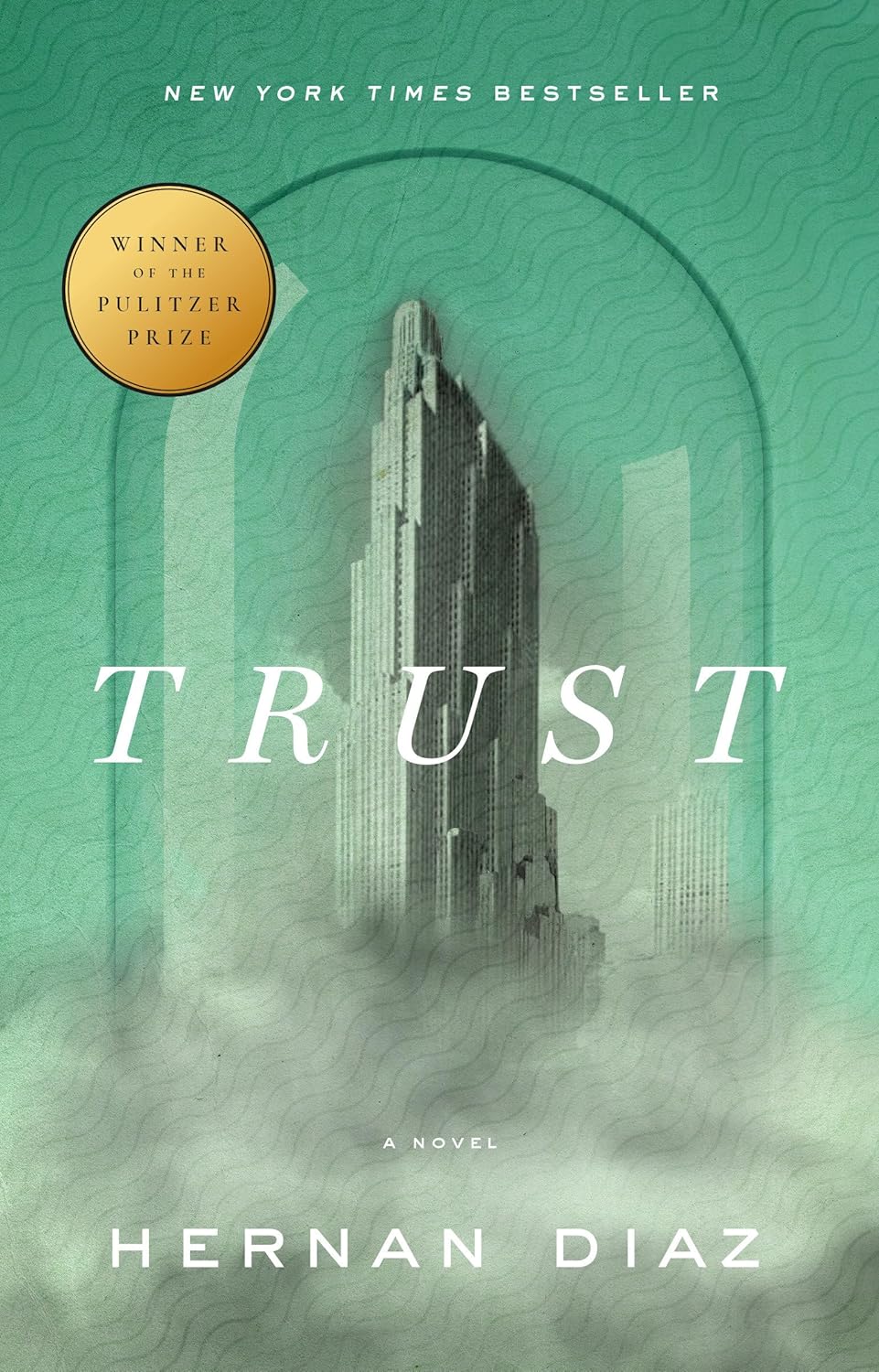
Immerse yourself in the captivating world of "TRUST" by Hernan Diaz, a literary masterpiece that has taken the reading community by storm. Winner of the prestigious Pulitzer Prize for Fiction, this novel is a testament to Diaz’s narrative genius, resonating deeply with both critics and readers alike. "TRUST" is not just a book; it’s an exploration of truth, perception, and the intricate dance between wealth and morality. As a New York Times Bestseller and one of Barack Obama’s favorite books of 2023, this novel has secured its place as a modern classic. Whether you’re a seasoned literary enthusiast or a casual reader, "TRUST" promises to challenge and enchant you with its profound storytelling.
Key Features
- Award-winning: Winner of the Pulitzer Prize for Fiction, cementing its status as a literary must-read.
- Critical Acclaim: Praised by leading authors and reviewers, including Lauren Groff and Sigrid Nunez, for its profound and moving narrative.
- Bestseller: A New York Times Bestseller, showcasing its popularity and wide-reaching impact.
- Cultural Relevance: Recognized for its significant commentary on contemporary issues, making it a vital read for today’s audience.
- Endorsements: Featured as one of Barack Obama’s favorite books of 2023, adding to its prestige.
- Quality Publishing: Published by Riverhead Books, known for producing high-quality literary works.
- Accessible Format: Available in English with a print length of 416 pages, ensuring an immersive yet manageable reading experience.
Pros and Cons
Pros:
- Engaging Storyline: Offers a gripping narrative that keeps readers enthralled from start to finish.
- Thought-provoking Themes: Explores deep and relevant themes such as trust, wealth, and morality.
- High-Quality Writing: Known for its exquisite prose and skillful storytelling.
- Wide Recognition: Acclaimed by major literary awards and notable figures.
- Broad Appeal: Suitable for various readers, from literary enthusiasts to casual bookworms.
Cons:
- Complex Structure: Some readers may find the narrative style and structure challenging to follow.
- Length: At 416 pages, it may be a commitment for those seeking a quick read.
- Niche Genre: Primarily appeals to fans of literary fiction and biographical historical fiction.
Why You’ll Love It
Discover a novel that transcends the ordinary and delves into the intricacies of human nature and societal norms. "TRUST" by Hernan Diaz is not just a book; it’s an experience that will linger in your thoughts long after you’ve turned the last page. Its rich, layered narrative invites you to question the very nature of truth and the stories we tell ourselves. With endorsements from literary icons and cultural leaders, this novel promises to be a rewarding addition to your bookshelf. Dive into a world of intrigue and insight, and let "TRUST" captivate your imagination. Order your copy today and join the conversation that has captivated readers worldwide.
KR –
Thanks to Dua Lipa
I read this book after seeing Dua Lipaâs interview with Hernan Diaz. The interview was dynamic, fun, complimentary, and insightful. The four-book structure and the motifs of money, high finance, non-credible narrators, and literary and historical intrigue seemed attractive to me.The book itself held my interest, in no small part because I wanted to understand it in a way that I could talk about it like I used to when I was in college. In an âeducatedâ way. And its structure and rich language kept me writing notes and looking up definitions, so I felt smarter, in the way that having a rich lexicon expands oneâs ability to be conscious of more of the details in oneâs everyday life.Around this same time, I am teaching students how to critique the credibility of online information, and wrestling with generative AI in my work as a technology teacher, and saw a cool little YouTube essay entitled âThe Curtains are Just Blue,â in which the narrator preaches that we should be proud to be critical thinkers; that the current rise of anti-intellectualism in the United States is stupid (lol â they stated it much more clearly and convincingly); and that it is way better to overthink things than to underthink them.So here I am to say that I enjoyed diving into this book. I enjoyed engaging with it. It is a conscious choice to spend time and energy engaging with anything, especially in todayâs world of infinite distractions. But engaging like this with a good book has been a favorite activity of mine for most of my life, and I feel the need to thank Dua Lipa for introducing it to me.
Joan B. –
A novel that rewards sticking with it
Warning — there’s a bit of a reveal here. This novel, written in 4 parts, requires patience to find out what it’s about, and if one sticks with it to the end, the reader realizes that it has been worth it. Written in 4 parts that from the titles of each seemed to be unconnected, when I started, I had no idea just what was going on. Was this single novel in fact going to be a group of 4 different stories? The first part I found difficult going, the writing style stilted and dated, though the story was interesting in an odd way. And then I moved on to part 2 and began to see that there might be a connection, maybe, but it wasn’t clear just what — but the writing style changed dramatically. Part 3 again is different, now a far more accessible writing style, and this is where we learn the tie between parts 1 and 3. The novel finishes with part 4, which in a way is a sort of epilogue, with a major twist on the truth of parts 1-3. Ultimately, when all the parts are integrated by the reader, this is a powerful book about the worlds of wealth in NY in the early 20th century, but more about personal relationships, ego, and self-deception. Well worth reading.
PJC –
Competent writing with a modest, predictable take on a now-common literary conceit
It will come as no surprise to anyone who has gotten to my review that this book consists of the story of a financially powerful couple told from four perspectives. If you didn’t know that, you would figure it out a few pages into the second version of the story. If you’re particularly surprised by the fourth and final story, then you should reread the title of the book, which might be retitled “Always Mistrust.” Mr. Diaz is a good enough writer that I don’t begrudge myself the time spent reading the book, but I found nothing lyrical or passionately revealing or inspiring or innovative in his style. He’s an okay storyteller, with characters I guess you can try earnestly to care about enough to deeply engage. Ultimately, I didn’t come close to succeeding in that. The fourth version of the story is–by my estimation–the one that is supposed to produce the OMG-response, but I already knew something was coming and that it was going to reshape my view of the central characters and of everything I read before. To miss that going into that last section would be to ignore the previous three versions of the tale. And then, early in that final “diary” section, when we learn of previously trivialized mathematical skills and are given more to chew on about things like musical appreciation with a little Music 101 philosophizing (D F# E A -> A E F# D), it’s pretty easy to guess what’s coming. That’s okay (except to the extent that the diarist sneers at predictability as a mark of lesser minds).It’s the way the great reveal happens that bothers me and makes me feel that this is a failed novel. In a diary that is terse, minimalist, merely suggestive, the diarist stops in a couple places to ham-handedly tell OMG counterstory (the one, I assume, most readers decide upon closing the book for the last time to TRUST, given its location in the text and the satisfaction that the final gotcha-putdown of an unsympathetic protagonist provides).The diarist claims that the jarringly different passages that explain exactly what what REALLY happened (in careful expository detail) gives her some relief from pain and discomfort, but it came across to me as a plot device that the author failed to pull off. If you’re going to just explain the OMG to me this way, then I’d prefer you stick it in a final explanatory section (Section V: Guess What!) written by an all-knowing author-god-voice. Don’t give me: “AM Ouch my back hurts PM Morph AM Powerpoint slide #1: my actual talents, part 1…(a)…slide #2: my pitiful spouse’s inadequacies…(a)…”One thing that diary section succeeded in doing was to swap out my feelings about the two central characters. The one who had seemed cold and insensitive gained a sliver of humanity and a quarter teaspoon of sympathy from me. The diarist, who rejoiced in bragging about personal superiority and absolute condescension toward a befuddled, largely incompetent other, lost any positive regard (already at very low simmer) that I had developed in the previous three versions of the story.Maybe that’s the point. Don’t trust anything you have just spent an entire book reading, including the final section. But if that’s the take-away, why should wish to learn more about these people I was misled about? Surely, a good story should leave you with some appetite for more…for something truthier and give-a-damn-ier. These are people I never really cared about. Rather than becoming multidimensional by the retelling of the story, they were one-dimensional four times over. I don’t like them (any of them, except maybe the champagne-toting butler: “Two glasses? Very good, sir.”). I don’t trust them. I feel no regret that they have disappeared into the dustbin of fictional time.
Anecdotal –
I canât see why this book was long listed for the Booker Prize in 2022 or how on earth it won the Pulitzer Prize in 2023. It seems a disjointed, rambling and confusing book about money, power and relationships.But that is a lie â a trick – a bit like Hernan Diaz in this book. On the contrary I think âTrustâ is a dazzling cut-diamond of a book. Unlike many novels with a beginning, middle and an end, Trust is constructed like a Russian Matryoshka doll where once the smallest doll â the âFuturesâ section of the book â is revealed all our questions are answered and we can only sit back and wonder at Diazâs deft sleight of hand. The author uses four different genres: first is the novel within the novel, then the manuscript, followed by the memoir and finally, the diary.From the first Diaz lulls the reader into a false sense of security. âBondsâ a novel within a novel, written by Harold Vanner in a traditional style, using the third person, lacking in dialogue, tells the story of successful investor Benjamin Rask and his wife in their New York Mansion. Helen Rask was an excellent mathematician with no acceptable outlet in a patriarchal society for her brilliance. Through her philanthropy and sponsorship of artists and musicians, this otherwise reserved woman creates a social bubble in which she feels comfortable and achieves great success. The loss of this richly cultural life hit her hard after the Depression when people blamed her husband for manipulating the markets and making money from other peopleâs misfortune. Her descent into mental illness was swift. An uppity wife would often find herself despatched to a clinic for experimental treatment and Helenâs fate was not a one-off. The reader learns later that the fictional author, Harold Vanner, had been entirely wrong about Helen aka Mildred. He may have changed the names of the two main protagonists but he was subsequently destroyed by the âreal-lifeâ Andrew Bevel because the story was clearly about the Bevels. How shocked Vanner would have been to learn that Mildred Bevel, the de facto victim was actually the brains behind Andrew Bevelâs success. He would have been horrified that he had lost his literary livelihood for such a monumental lie â no one would have suspected that the âangel in the Bevel houseâ, Mildred Bevel, had been capable of such Machiavellian scheming and, letâs face it, shocking brilliance!âMy Lifeâ, the manuscript of Andrew Bevelâs autobiography, is written in the first person but the writing is more stilted, less fluent than Vannerâs novel and is peppered with copious authorâs notes for further research. It eventually stutters to an unresolved end, much as Bevelâs life ended, – suddenly. Bevel employed an inexperienced secretary, Ida Partenza, to not only type up the book but also invent incidents in the life of his late wife â a woman Ida had never met. Today we would say that Ida was a ghost writer, of sorts. The interviews between her and Bevel gave her a chance to develop her obvious talent for creative writing. She had already created a false biography for herself along with a new name. This was a game she would be able to play with inexperienced enthusiasm. With her boss as the only source, writing Mildredâs truth was nigh on impossible. For example on page 286 Bevel instructed Ida as follows:âWe wouldnât want anyone to believe she was arrogant or affected. Keep it simple. Make her love of the arts approachable for the common readerâ. That Mildred had sponsored and enjoyed innovative modern classical music was only one of the truths that needed to be buried. Ida realised that the Mildred she was writing about was very different from the one who had decorated her bedroom with minimalist furniture. Ida had even inserted interests and events from her own life into Mildredâs to pad out the text, so she was well aware of the lies contained within its pages.This book is set in the past but Diaz is a contemporary writer. âTrustâ may well be a metaphor for the modern world â awash with lies and deepfake news. If he were alive today Andrew Bevel would no doubt have used AI, Chat GPT to write his book and social media to circulate lies about Harold Venner. For example, look at the vitriol addressed to J K Rowling.The more I think about it, the more Bevelâs pride in being able to bend and align reality so that the adjustment looks like truth, the more I read commentary about the present Age. Ida acknowledges in later life (her memoir section written in italics) that she had also been manipulated by him, that money equals power and that power is not always wielded by the most ethical people. Her naivete began to fall away with the realisation that Jack had been spying on her and her father had stolen pages from her bin. She sensed a genuine mystery around the Bevels and her love of crime novels whetted her appetite for finding out the answer to the puzzle of who Mildred really was. However, she conversely admitted that working for Bevel had set her on a solid career path, paid her a good salary, and provided her with independence and a roof over her head as well as paying for her fatherâs accommodation.Ida Partenza had been regularly subjected to her fatherâs political rantings and preoccupations until she left home. He even told her that being a Secretary was a demeaning occupation, which promised independence but was actually âanother knot in the millenary subjection of women to the rule of menâ, failing to recognise the hypocrisy of his words. He would eventually live alone in unhygienic squalor rather than lift a hand to do anything about it. Despite grudgingly admitting that secretarial work was work – and he admired anyone who worked – he did not seem to understand that cooking, laundry, and cleaning was house âworkâ.Ida attempted to make sense of the Bevels by writing a memoir but it was only when she discovered the hidden diary that she discovered Mildredâs truth. Mildred describes her husband, Andrew, as âstoically sulkyâ, which is not surprising as he was constantly jealous of her superior skills in successfully predicting the stock marketâs movements while taking all the credit for himself. This was a dark secret Andrew Bevel was determined to take to his grave. On the other hand, Mildred felt guilty that her financial dexterity had financially ruined people. In another extract she writes: âI donât believe in magic, but the viciousness of cancer after the crash didnât feel like a coincidence.âIn this book financial trust, trust between husband and wife or parents and children is often misplaced. Women are silenced. The men in âTrustâ donât come out of it looking very good. Clearly, this book is as much about the imposed restrictive experience of being a woman as it is about making money. Living in the twenty-first century, as we do, when some people struggle to find words to describe what a woman actually is, it is a salutary reminder that we are human beings first.Despite growing up speaking Spanish and Swedish, Diaz has made no secret of his love for the English language. He writes longhand in notebooks, in English, with a Mont Blanc pen, often in the Centre for Brooklyn History library, close to his home. He is widely read and his academic background contributes to the wealth of previous reading that enriches this novel.I really didnât want this thoughtful, elegantly-written book to end and would recommend it to others.
Mo –
Hernan Diaz is one of the most interesting authors of our time. His contributions have not gone unnoticed. His work is captivating and inspiring. His book is a masterpiece. The stories touch my heart.Sincerely mo
Sharon P –
Beautiful writing, compelling storyline, intriguing and satisfying! Would def consider rereading which I rarely do. Outstanding. Glad a friend recommended it to me
David Roman T. –
Interesting and amazing at the same time.I decided to read the english version and the prose was superb.Once you finish reading, it is obvious why Hernan Diaz won the Pulitzer Price!
Harkant Mankad –
A very enchanting novel. Twists and turns, sharp or subtle, jarring or smooth, happy or sad, handled very well by a talented author. A wordsmith. The structure of the novel, intriguing throughout, weaves a memorable tale, one would wish to read over and over. Super charectization. Like the journal in the novel, would the narrative would be haunting long after reading the novel.